
Digital Marketing vs Traditional Marketing: Which Career Has Better Opportunities?
Marketing has changed significantly with the growth of the internet. Businesses that once depended mainly on newspapers, television, radio, billboards, and printed advertisements now use search engines, social media, websites, email, and online advertising to reach customers.
This shift has also created new career options for people interested in marketing.
If you’re deciding between a career in digital marketing and traditional marketing, the right choice depends on the type of work you enjoy, the skills you want to develop, and the kind of career you want to build.
Both fields have value, but the skills required and the career opportunities available are quite different.
What Is Traditional Marketing?
Traditional marketing refers to marketing methods that existed before digital platforms became a major part of everyday business.
Some common traditional marketing channels include:
- Television advertisements
- Newspaper and magazine advertisements
- Radio
- Billboards
- Brochures and flyers
- Direct mail
- Outdoor advertising
- Events and trade shows
Traditional marketing is generally based on reaching a broad audience through established media channels. It can be particularly useful for businesses that want strong local visibility or mass brand awareness.
For example, a company launching a product across a city might use billboards, newspaper advertisements, radio spots, and outdoor campaigns to reach a large number of people.
What Is Digital Marketing?
Digital marketing involves promoting products, services, or brands through online platforms and digital channels.
Some of the major areas include:
- Search Engine Optimization (SEO)
- Social Media Marketing
- Google Ads and PPC
- Content Marketing
- Email Marketing
- Influencer Marketing
- Affiliate Marketing
- Website Marketing
- Analytics and conversion optimization
One of the biggest differences is the amount of data available to marketers. A digital marketer can monitor impressions, clicks, traffic, leads, conversions, engagement, and other campaign metrics.
This allows businesses to evaluate campaigns and make changes based on performance.
Digital Marketing vs Traditional Marketing: Key Differences
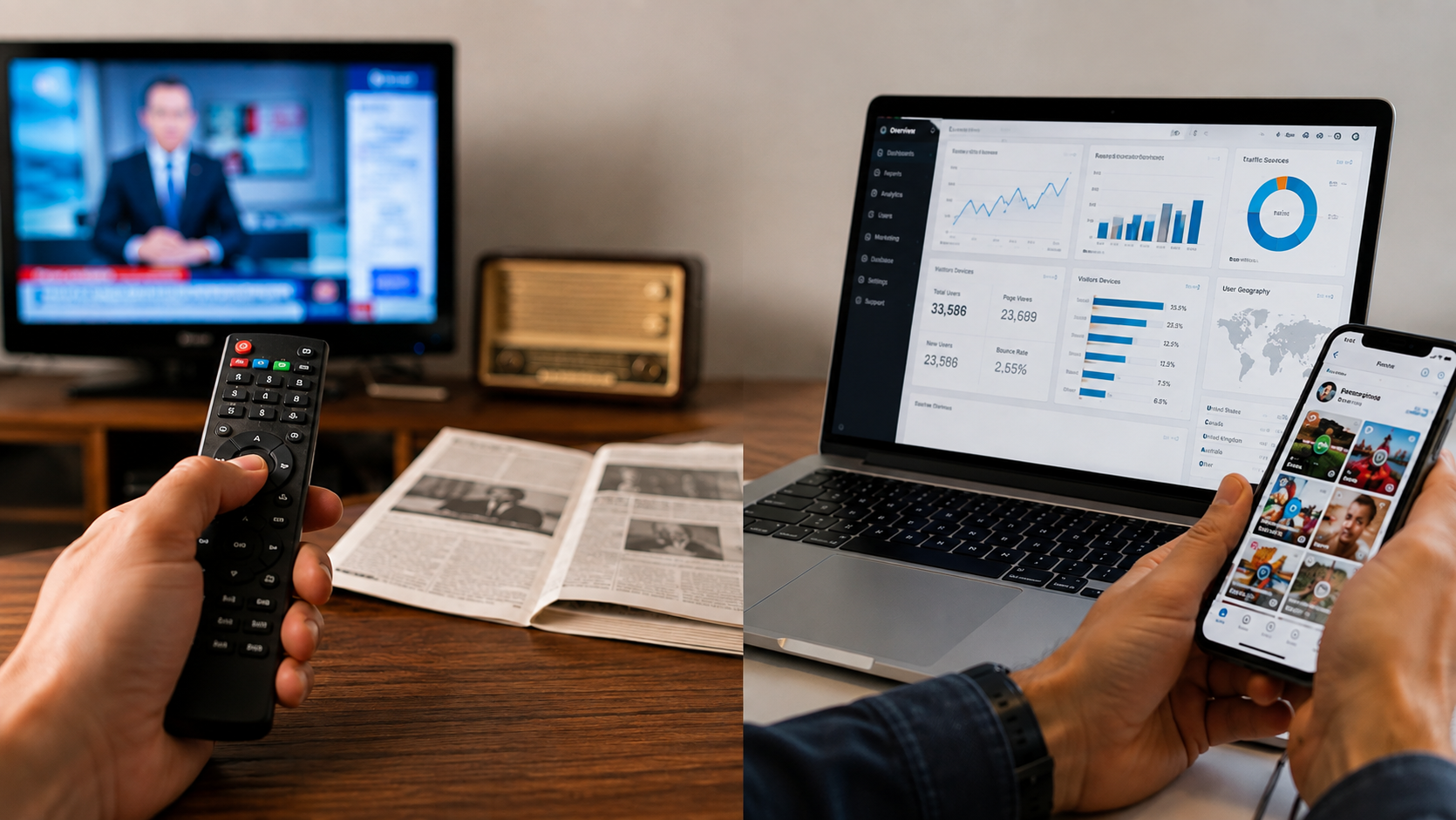
Traditional and digital marketing differ not only in the channels they use but also in how businesses reach audiences, track campaigns and interact with customers. Traditional marketing relies on channels such as television, newspapers, magazines, radio, billboards, brochures, direct mail and outdoor advertising, generally targeting a broader audience. Digital marketing uses search engines, social media, websites, email and online advertising, allowing businesses to target specific audience groups and track metrics such as impressions, clicks, website traffic, leads, conversions and engagement.
Another major difference is campaign flexibility. Changes to a traditional campaign can take more time, while digital campaigns can often be adjusted based on performance data. Traditional marketing is generally more one-way, whereas digital platforms allow businesses to interact directly with customers through comments, messages, reviews and other online channels. Digital marketing also provides a wider range of specialised career opportunities, including SEO, paid advertising, social media, content marketing and analytics. It can also offer opportunities for freelance and remote work in some roles.
The difference isn’t simply that one uses the internet and the other doesn’t. The way marketers plan campaigns, reach audiences, measure results, and optimise their work is also different.
Which Field Has More Career Opportunities?
For someone entering the marketing industry today, digital marketing offers a wider range of specialised career paths.
A single digital marketing team can include SEO specialists, paid advertising professionals, social media managers, content marketers, email marketers, marketing analysts, and digital marketing strategists.
This creates several possible entry points for beginners.
For example, someone who enjoys writing might move toward content marketing or SEO. A person who likes numbers and campaign performance may prefer paid advertising or marketing analytics. Someone interested in communication and creativity may enjoy social media marketing.
Traditional marketing still has career opportunities, particularly in advertising agencies, media companies, public relations, brand management, sales promotion, and corporate marketing. But the range of specialised entry-level roles is generally broader within digital marketing.
Career Options in Digital Marketing
A digital marketing career doesn’t mean doing the same job every day. There are several specialisations you can explore.
SEO Specialist
SEO specialists work on improving a website’s visibility in search engines. Their work can include keyword research, content optimisation, technical SEO, internal linking, competitor analysis, and performance monitoring.
Performance Marketing SpecialistPerformance marketers manage paid campaigns across platforms such as Google Ads and Meta Ads. They analyse campaign data and work toward improving metrics such as conversions, cost per acquisition, and return on advertising spend.
Social Media Specialist
Social media professionals develop content strategies, manage social platforms, monitor engagement, and help brands communicate with their target audience.
Content Marketer
Content marketers create and plan useful content for websites, blogs, social platforms, email campaigns, and other digital channels.
Digital Marketing Analyst
Marketing analysts work with data to understand website traffic, campaign performance, customer behaviour, and conversions.
Digital Marketing Strategist
Strategists bring different channels together and develop marketing plans based on business objectives, customer behaviour, competition, and available resources.
These roles show why digital marketing can be attractive to people with different interests and strengths.
What About a Career in Traditional Marketing?
Traditional marketing shouldn’t be dismissed.
Large brands still use television, outdoor advertising, print, events, radio, and other offline channels. Traditional marketing can be especially useful when the objective is broad brand exposure or reaching audiences that respond strongly to offline media.
Career paths can include:
- Brand Executive
- Marketing Executive
- Advertising Executive
- Media Planner
- Public Relations Executive
- Brand Manager
- Event Marketing Executive
- Sales Promotion Executive
The challenge for beginners is that many traditional marketing roles can overlap with broader business, sales, advertising, and brand-management functions.
Digital marketing tends to offer more specialised roles that allow you to build expertise in a particular area.
Why Digital Marketing Can Be a Practical Choice for Freshers
For many freshers, digital marketing can be the more practical option.
You don’t necessarily need to wait years to gain exposure to real marketing work. You can build a website, create content, perform an SEO audit, run a small advertising campaign, manage a social media page, or analyse website data as part of your learning.
That matters when you’re applying for your first job.
A portfolio can demonstrate what you can actually do instead of relying entirely on academic qualifications.
Skills You Need for Digital Marketing
Digital marketing combines creative, analytical, and technical skills.
Some important skills include:
SEO: Understanding how search engines discover, evaluate, and rank content.
Content creation: Writing useful content that addresses what audiences are searching for.
Advertising: Understanding campaign structures, targeting, bidding, budgets, and conversion tracking.
Analytics: Reading data and using it to make marketing decisions.
Social media: Creating platform-specific content and understanding audience behaviour.
Communication: Explaining ideas clearly to clients, teams, and customers.
AI and marketing tools: Using modern tools to research, analyse, create, and improve marketing campaigns.
Digital marketing is also changing with AI-powered search, automation, analytics and new ways of reaching audiences online. This makes continuous learning important for anyone planning a long-term career in the field.
Digital Marketing or Traditional Marketing: Which Should You Choose?
If you enjoy television advertising, branding, events, media planning, public relations, and offline campaigns, traditional marketing may suit you.
If you’re interested in SEO, social media, Google Ads, content, analytics, websites, AI tools, and measurable campaigns, digital marketing is likely to be a better fit.
There’s also a third option.
Learn both, but develop deeper expertise in digital marketing.
Modern businesses often combine online and offline campaigns. A television advertisement might direct people to a website. A billboard can promote a social media campaign. An event can generate content for Instagram and YouTube.
Understanding how different channels work together can make you a stronger marketer.
Is Digital Marketing a Good Career in 2026?
Digital marketing remains a strong career option, but it’s no longer enough to know basic social media posting or a few marketing terms.
Employers increasingly look for people who can use tools, analyse results, solve marketing problems, create campaigns, and show practical work.
That means your learning approach matters.
Instead of only memorising definitions, work on projects. Build a website. Practise SEO. Study advertising campaigns. Analyse competitors. Create content. Learn analytics. Build a portfolio.
That’s how theoretical knowledge becomes a usable professional skill.
How Techsche Campus Can Help You Build Digital Marketing Skills
If you’re planning a career in digital marketing, where and how you learn can make a real difference. Reading about SEO, social media, Google Ads, or analytics is useful, but knowing how to apply those skills to an actual business is what matters when you’re starting out.
At Techsche Campus, the focus is on helping learners understand how digital marketing works beyond theory. Students can build skills across areas such as SEO, content marketing, social media, paid advertising, analytics, and website optimisation, while gaining an understanding of how these channels work together.
For someone looking for digital marketing training in Trivandrum, the aim should be to come out with more than a certificate. Practical projects, hands-on experience, and a portfolio can give you something concrete to show employers or clients when you’re looking for your first opportunity.
Whether you’re aiming for a digital marketing job, internship, freelance projects, or eventually want to work with your own clients, learning by actually doing the work can give you a much stronger starting point.