
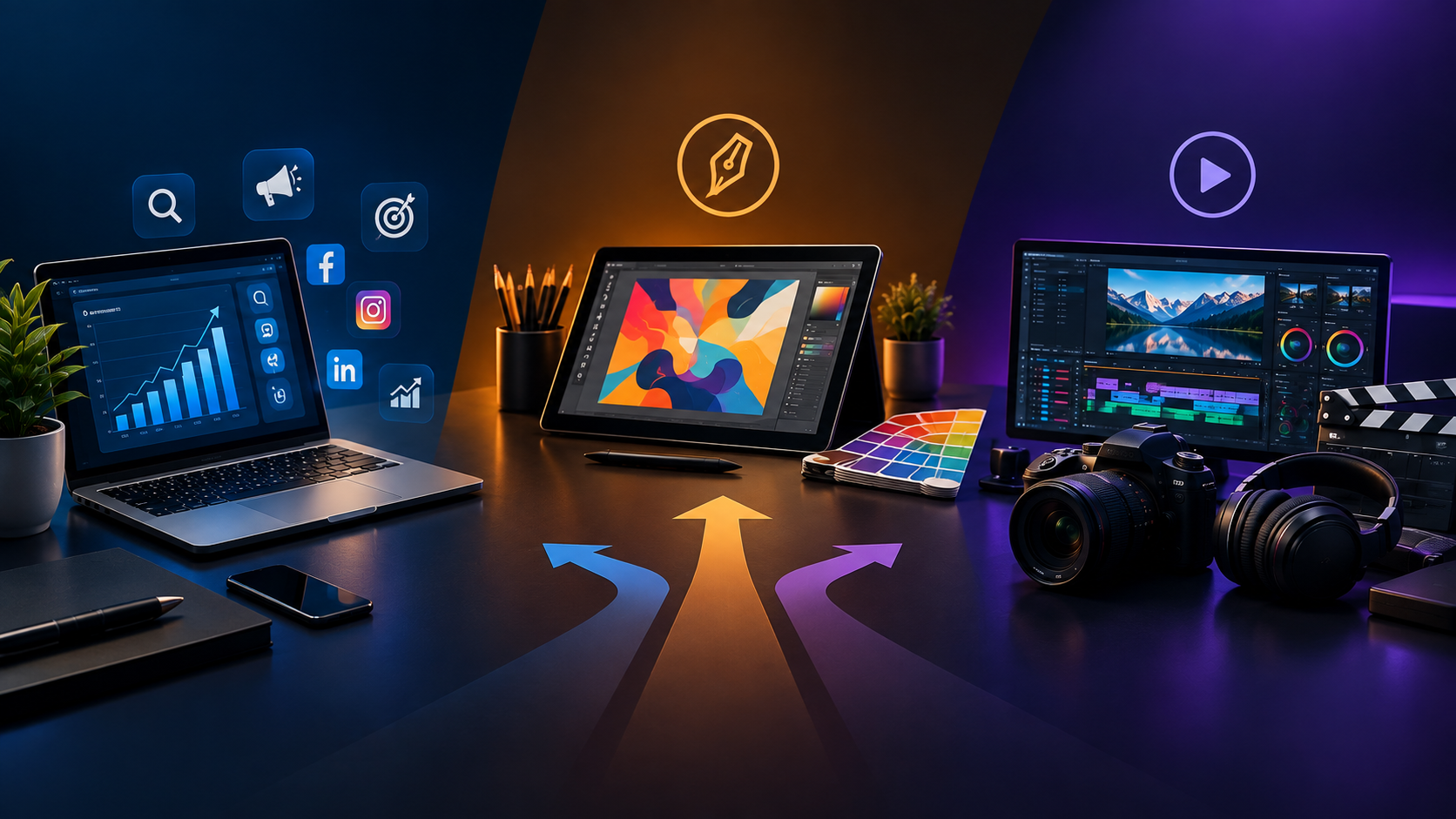
Choosing the right career can be exciting, but it can also feel confusing when several fields seem equally interesting. The digital industry has created many new opportunities for people with marketing, creative, and technical abilities. Among the most popular options today are digital marketing, graphic design, and multimedia. Each field offers a different type of work, requires a different skill set, and provides unique opportunities for professional growth.
For students, graduates, working professionals, and creative individuals, understanding these career paths can make the decision much easier. Instead of choosing a field simply because it is popular, it is important to identify your interests, natural strengths, preferred working style, and long term goals.
This guide explores the differences between digital marketing, graphic design, and multimedia, helping you understand what each career involves and which direction may be suitable for you.
What Is Digital Marketing?
Digital marketing focuses on promoting products, services, brands, and businesses through online channels. It combines marketing knowledge with digital platforms, analytics, communication, and creative thinking.
A digital marketing professional may work on search engine optimization, social media campaigns, paid advertising, email marketing, content strategy, online branding, and lead generation. The main objective is to connect businesses with the right audience through digital channels.
Digital marketing can be a suitable career for people who enjoy communication, strategy, research, technology, and analyzing results. It is also a field where professionals often work across different industries because almost every modern business needs an online presence.
A person working in digital marketing may handle tasks such as researching keywords, planning social media content, optimizing websites, managing advertising campaigns, studying audience behavior, and monitoring campaign performance.
Who Should Consider a Career in Digital Marketing?
Digital marketing may be an attractive option if you enjoy combining creativity with practical business goals. You do not necessarily need to be a graphic designer or an advanced technical expert to enter the field.
This career can suit people who:
Enjoy creating ideas and strategies
Like communicating with different audiences
Have an interest in online platforms and technology
Enjoy research and data analysis
Want to understand consumer behavior
Prefer work that changes frequently
Like measuring results and improving performance
Digital marketing also offers opportunities in specialized areas. Someone may begin with general digital marketing and later focus on SEO, social media marketing, Google Ads, content marketing, email marketing, or performance marketing.
For learners looking for structured industry focused training, an Advanced Digital Marketing Course in Trivandrum provides an organized way to understand important concepts, tools, and practical techniques before entering the professional environment.
What Is Graphic Design?
Graphic design is a visual communication field. Graphic designers use images, typography, layouts, illustrations, shapes, and colors to communicate ideas effectively.
A graphic designer may create brand identities, social media creatives, posters, brochures, advertisements, packaging designs, presentations, website visuals, and other digital or printed materials.
Unlike digital marketing, which is strongly connected to promotion and audience engagement, graphic design focuses primarily on visual presentation and communication.
Graphic design requires creativity, patience, attention to detail, and an understanding of visual principles. A designer needs to think carefully about how colors, fonts, images, spacing, and composition work together.
Who Should Consider a Career in Graphic Design?
Graphic design can be a strong career option for people who enjoy creating visual concepts and expressing ideas through design.
You may enjoy graphic design if you:
Have a strong interest in visual creativity
Enjoy drawing, composition, or illustration
Pay attention to details
Like experimenting with colors and typography
Enjoy working with design software
Prefer visually oriented tasks
Like transforming ideas into attractive designs
Graphic designers are needed by businesses, advertising agencies, media companies, educational organizations, e-commerce brands, startups, and many other industries.
As digital communication continues to grow, the demand for quality visual content has expanded across websites, social media platforms, marketing campaigns, presentations, and online advertisements.
What Is Multimedia?
Multimedia is a broad creative field that combines different forms of communication, including graphics, video, animation, audio, photography, and interactive content.
A multimedia professional may work in video editing, animation, motion graphics, visual effects, photography, content production, or digital media creation. Because multimedia includes several creative disciplines, the field can offer a wider range of career directions.
Multimedia is especially relevant to the entertainment, advertising, education, media, gaming, marketing, and content creation industries.
Someone who enjoys working with moving visuals, storytelling, sound, animation, and digital production may find multimedia particularly interesting.
Who Should Consider a Career in Multimedia?
Multimedia can be a good fit for people who want to work on creative projects that go beyond static images.
You may want to explore multimedia if you:
Enjoy video and visual storytelling
Have an interest in animation
Like photography or filmmaking
Want to learn video editing
Enjoy experimenting with motion and sound
Are interested in creative software
Like working on dynamic digital content
A multimedia career can involve both technical and creative responsibilities. Professionals often need to understand composition, editing, timing, storytelling, visual effects, and audience engagement.
Digital Marketing vs Graphic Design vs Multimedia
Although these three fields are different, they often overlap in the professional world.
A digital marketer may need basic design knowledge to create better campaigns. A graphic designer may create visuals for digital advertising and social media. A multimedia professional may produce videos used in marketing campaigns.
The biggest difference lies in the core purpose of each profession.
Digital marketing is primarily focused on reaching audiences, generating engagement, increasing visibility, and supporting business objectives through online channels.
Graphic design is centered on visual communication. The designer takes information or ideas and presents them through compelling visual elements.
Multimedia focuses on producing richer digital experiences using a combination of video, graphics, animation, audio, photography, and other media formats.
Understanding these distinctions can help you choose an educational path that matches your interests.
Which Field Requires the Most Creativity?
All three careers involve creativity, but the type of creativity can differ.
Digital marketing involves creative thinking in campaign planning, storytelling, content development, audience targeting, and problem solving. Creativity is often connected to a specific business objective.
Graphic design requires visual creativity. Designers need to develop concepts that are clear, attractive, consistent, and suitable for a specific brand or communication goal.
Multimedia can involve creative storytelling across multiple formats. A multimedia project may combine visuals, sound, movement, animation, and editing to create a complete experience.
Therefore, the better question is not which field is more creative, but what kind of creativity you enjoy using.
Which Career Offers More Variety?
The answer depends on the role you choose and how you develop your skills.
Digital marketing can provide variety because campaigns, industries, audiences, platforms, and trends are constantly changing. Professionals may work on websites, social media, search engines, advertising platforms, analytics, and content.
Graphic design can also be varied. Designers may move between branding projects, advertisements, social media graphics, packaging, presentations, and website assets.
Multimedia may offer variety through video editing, animation, photography, motion graphics, visual storytelling, and content production.
People who enjoy constantly exploring different projects may find all three areas rewarding.
Can You Combine These Career Paths?
Yes. These fields can complement each other extremely well.
For example, a digital marketer with graphic design skills can create more visually engaging campaign materials. A graphic designer who understands digital marketing can develop designs that are not only attractive but also aligned with marketing goals.
A multimedia professional who understands digital marketing can create promotional videos, advertisements, reels, and branded content with a better understanding of audience expectations.
This combination of skills can be valuable because modern businesses often look for professionals who understand more than one part of the digital ecosystem.
What Skills Should You Develop?
Regardless of which field you choose, building a strong foundation is important.
For digital marketing, useful skills include SEO, social media marketing, content strategy, online advertising, analytics, keyword research, and communication.
For graphic design, important skills include layout design, typography, color theory, branding, image editing, visual hierarchy, and design software.
For multimedia, valuable areas include video editing, animation, motion graphics, photography, audio editing, storytelling, and production techniques.
Soft skills matter as well. Communication, time management, adaptability, teamwork, problem solving, and willingness to learn can contribute significantly to long term career development.
Why Practical Learning Matters
Creative and digital careers cannot be mastered through theory alone. Practical experience helps learners understand how skills are used in real projects.
Working on sample campaigns, designing brand materials, producing videos, building portfolios, analyzing digital performance, and completing creative assignments can improve confidence and professional readiness.
Students should also become familiar with relevant tools and platforms used in their chosen field. The digital industry changes quickly, so continuous learning is important even after formal education.
How TECHSCHE CAMPUS Can Support Your Learning Journey
For students exploring opportunities in the digital and creative sectors, TECHSCHE CAMPUS provides a learning environment focused on developing practical knowledge and career relevant skills.
Choosing the right course should depend on your goals rather than following trends. Take time to understand the subjects covered, the level of practical exposure, the tools you will learn, and how the training connects with your career plans.
Whether your interest is in digital marketing, graphic design, multimedia, or a combination of these areas, structured learning can help you build a stronger foundation.
A well planned learning journey can also help you understand which area suits your personality and strengths before making a long term career decision.
How to Decide Which Career Is Right for You
Start by asking yourself a few simple questions.
Do you enjoy communication, strategy, analytics, and online platforms? Digital marketing may match your interests.
Do you enjoy creating visual concepts, working with typography, colors, and layouts? Graphic design may be more suitable.
Do you enjoy video, animation, photography, sound, and storytelling? Multimedia may be the direction you want to explore.
You should also think about the type of projects you would enjoy working on every day. Career satisfaction often comes from enjoying the process, not just the job title.
It can also be helpful to experiment with basic tasks from all three fields. Try creating a social media campaign, designing a poster, editing a short video, or planning a simple online strategy. These experiences can reveal which activities naturally hold your attention.
Building a Strong Career in the Digital Creative Industry
Whichever path you choose, success usually develops through consistent learning, practical experience, and portfolio building.
A portfolio can demonstrate what you are capable of creating. Digital marketers can showcase campaign concepts, SEO projects, content strategies, and performance reports. Graphic designers can present branding work, advertisements, layouts, and social media designs. Multimedia professionals can showcase edited videos, animations, motion graphics, photographs, and other creative projects.
Networking can also help. Connecting with professionals, participating in projects, attending workshops, and staying updated with industry developments can expose you to new opportunities and ideas.
The digital creative industry rewards people who are curious and willing to keep improving. New tools, platforms, technologies, and audience behaviors continue to influence the way businesses communicate.
Final Thoughts
Digital marketing, graphic design, and multimedia each offer distinct career possibilities. There is no single path that suits everyone. The right choice depends on your interests, abilities, preferred work style, and professional goals.
Digital marketing may appeal to people who enjoy strategy, communication, and measurable online growth. Graphic design may be ideal for individuals who express themselves through visual communication. Multimedia may suit those who enjoy combining video, animation, photography, audio, and storytelling.
At the same time, these disciplines are increasingly connected. Learning complementary skills can help you understand the broader digital environment and create more opportunities for professional development.
Whether you choose one specialization or decide to combine multiple skills, starting with quality education and practical experience can make your career journey more focused and confident. With the right approach, digital and creative skills can become a strong foundation for building a meaningful professional future.